
Dentures – Lillington, NC
The Tried-and-True Solution for Restoring Smiles

If you’ve lost one or more of your natural teeth, the resulting gaps in your grin can potentially detract from your daily quality of life in several ways. For instance, you may feel self-conscious about the sudden changes to your visage or struggle to eat or speak with confidence.
Dentures are the tried-and-true solution for restoring smiles after tooth loss that can simultaneously enhance your mouth’s appearance and functionality, regardless of how many teeth went missing. Continue reading to learn more about this popular treatment, and please don’t hesitate to contact us for additional information.
Why Choose Lillington Dental Care for Dentures?
- Member of the American Dental Association
- Customizable Materials for Lifelike Results
- Insurance Accepted and Flexible Financing Available
Who's a Good Candidate for Dentures?

If you are interested in rebuilding your smile with dentures, you likely have an important question on your mind: Am I a good candidate? If that’s the case, you’ll be happy to hear that this tried-and-true tooth-replacement solution is quite versatile. So, don’t hesitate to schedule a consultation with us. In the meantime, you can read on to learn more on the topic, including the effects of missing teeth and the qualities we look for in a good dentures candidate.
Effects of Missing Teeth

Oftentimes, patients assume the negative effects of tooth loss begin and end with appearance. The truth is that the spaces in your smile left behind by missing teeth can impact your oral health and general well-being as well. For example, it’s harder to bite and chew without two complete arches, and you might develop gastrointestinal issues from swallowing overly large pieces that can’t be easily digested. You might also develop changes to your speech patterns, like a lisp, that make communication more challenging. For all of those reasons, we recommend scheduling a consultation with us sooner rather than later.
What Qualifies You for Dentures?
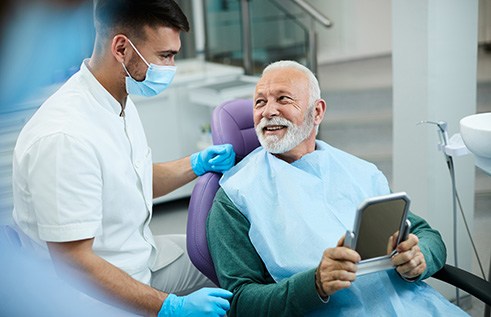
Although dentures are quite versatile, you must consult Dr. Butler to ensure you’re a good candidate. During your visit, he will review your dental history, examine your mouth, and learn about your daily habits. Then, he can discuss the different tooth-replacement solutions we offer and help you decide if dentures are the best one for you.
Important note: If any pre-existing issues are found during the exam that might interfere with the results, like gum disease, then the necessary restorative care will need to be provided first.
Alternative Tooth-Replacement Options

Rebuilding your grin with a customized set of dentures allows you to overcome many of the changes to your abilities that developed after you lost one or more of your teeth. However, they aren’t for everyone. If we decide for one reason or another that they aren’t the best smile-rebuilding solution for you, then we will discuss the other ones we offer, including:
- Dental Bridges – If you are missing only one tooth, then we may recommend a dental bridge. The restoration is secured in place with two custom dental crowns, which are bonded to the two teeth surrounding the gap. Only the best dental materials are used, and they are customized to suit your unique face shape, dental needs, and smile goals, so it will look and feel extremely natural.
- Dental Implants – Dental implants are widely loved by dentists and patients alike since they replace both the root and crown of the tooth. They also help prevent bone loss, preserve your youthful face shape, and have a long lifespan. Plus, they can help patients at all different stages of tooth loss, including those who don’t have any of their natural teeth left.
Types of Dentures
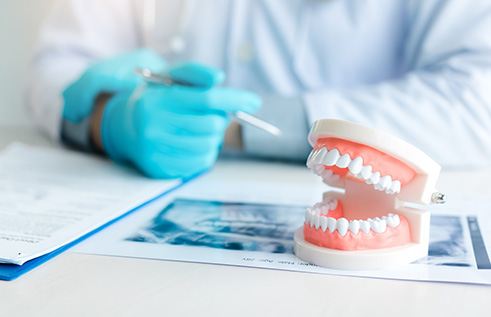
There are three types of dentures, and the proper treatment for you depends significantly on your unique circumstances and the number of teeth that have been lost. Once you’ve consulted Dr. Butler, he can recommend one of the following options based on his findings.
Partial Dentures
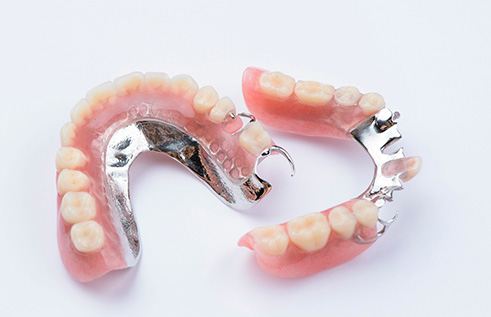
Those who have lost a few teeth sporadically throughout their mouths may benefit from partial dentures. These restorations consist of an acrylic base that contains metallic clips that anchor to healthy teeth in your mouth. They include the necessary number of pontics (artificial teeth) to close the spaces in your smile.
Full Dentures
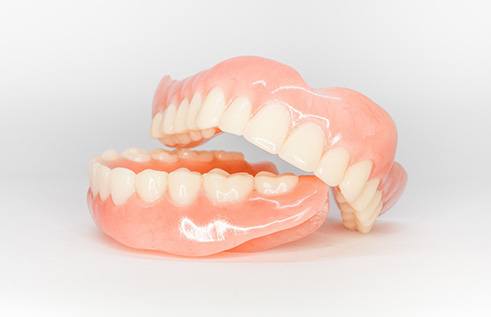
If you’ve lost all or most of your natural teeth, you will likely require a complete set of dentures. These have an acrylic, gum-colored base containing a complete arch of replacement teeth customized to resemble the ones that went missing. They rely on a firm suction against your connective tissues to remain in place, so you must have sufficiently healthy gums to proceed.
Implant Dentures
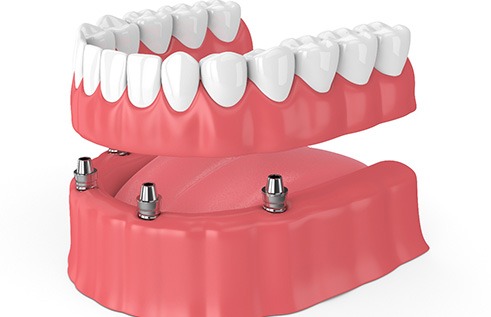
Dental implants are the only options that are surgically placed into your jaw and eventually fuse with the bone to become a more permanent part of your mouth. Four to eight of these rods can be placed to anchor a lifelike set of dentures, which are less likely to become destabilized or dislodged over time.
How Dentures Are Made
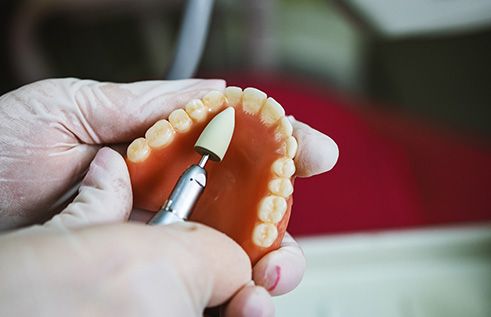
Congratulations on deciding to get a durable, lifelike pair of dentures to restore your beautiful smile. Now that you’ve made your choice, you may be curious to know what the manufacturing process looks like. Understanding how your new prosthetic will be made and which materials will be used to create it will help you appreciate your newly restored smile even more. Whether you’ve chosen a partial, full, or implant denture, here’s how the magic happens!
Step 1: Impressions
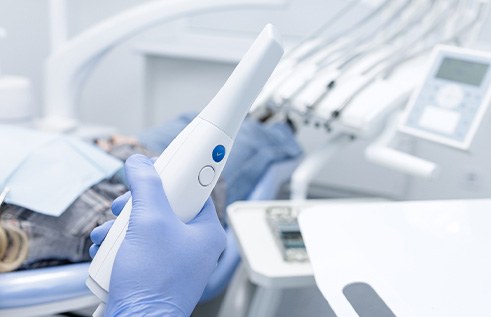
Once you’ve made the life-changing decision to get dentures, your dentist will begin the process by taking digital impressions of your mouth. This eliminates the need for messy goop that can often be inaccurate or become damaged in transit to the dental lab. It also reduces your carbon footprint, because the impressions can be sent to the lab digitally and won’t end up in a landfill after the manufacturing process. Furthermore, digital impressions are much more comfortable to make, and are much faster to deliver to the lab, so you’ll get your new dentures that much sooner!
Step 2: Wax Mold Creation
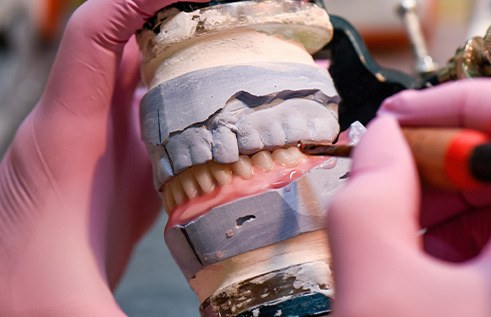
Once your impressions are digitally delivered to the dental lab, a lab technician will use them to create a wax model of your mouth. This will be used to set the acrylic or ceramic teeth.
The technician will carve the wax around each tooth, texturize the gums so they look realistic, and make the mold look as close as possible to your final prosthetic. Then, they’ll send the model back to Dr. Butler and you’ll return to the office to try it on. If you and Dr. Butler approve, he’ll send it back to the lab, where the technician will use it to create a plaster mold of your mouth by pouring hot water inside to melt the wax. This will allow them to inject a separator into the mold and keep the acrylic from sticking to it and then inject the acrylic to create the base of the dentures that sits on top of your gumline.
Step 3: Fit Check
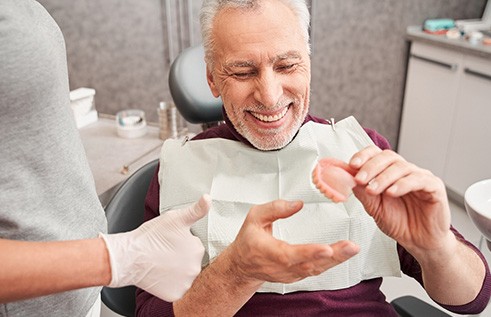
Now the denture will be sent back to Dr. Butler for you to try it on once again. If you approve, it will return to the laboratory to continue the process. This step is an ideal time to make any changes to the prosthetic if you aren’t completely satisfied. Remember, this is your smile and it’s important that you are happy with how it looks and feels.
Step 4: Back to the Lab for Refinements
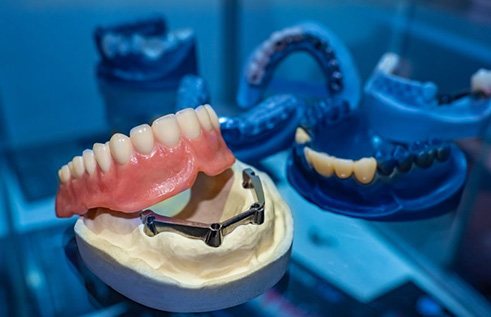
Once the wax mold returns to the dental lab, the technician will make a plaster version of it. They will eliminate any of the remaining wax portions by boiling the plaster, and indent holes in the teeth so they can attach to the acrylic base.
They can now inject more separator into the mold to prevent the acrylic from sticking to it and then inject the acrylic. This will create the base of the dentures and attach the teeth to the mold. The dentures will then be polished, cleaned up, and any remaining bits of plaster residue will be removed in an ultrasonic bath.
Step 5: Take Them Home!
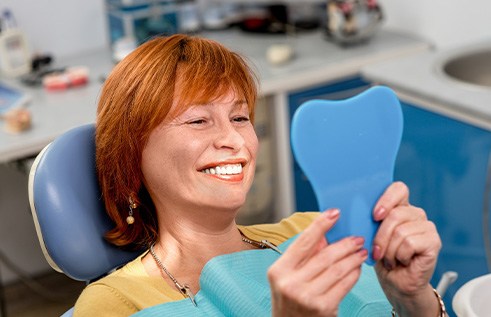
Your final dentures are now ready to be worn! They’ll now be sent back to Dr. Butler’s office for you to come back and try them on. At your appointment, Dr. Butler will show you how to put them on and take them out, clean them, and properly care for them.
Once you head home with your new smile, it will take about 30 days to get used to wearing your dentures. Over the next few weeks, your facial muscles will strengthen to better support your prosthetics, allowing you to chew and speak more comfortably. You may notice some slippage while chewing and speaking at first, but this is completely normal and should stop with time. If it doesn't, please don’t hesitate to contact us, as we may need to make further adjustments to your prosthetics.
The Benefits of Dentures
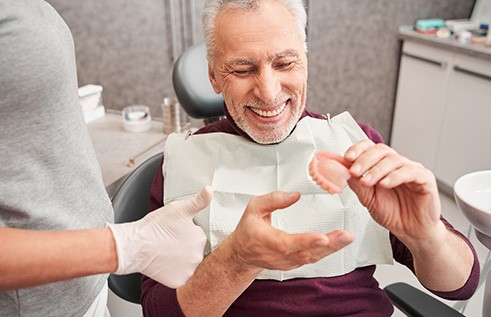
Replacing your missing teeth with dentures provides many helpful benefits, such as:
- Lifelike results. Your restoration is carefully customized to resemble your natural teeth and gums so you look and feel like the most attractive version of yourself.
- Improved bite force. This treatment returns a portion of your chewing power so you can enjoy more wholesome foods to support your oral and overall health.
- Enhanced enunciation. It can take about a month to adjust to the presence of your new teeth, but then you can overcome any changes to your speech resulting from tooth loss.
- Protect remaining teeth. If you have natural teeth remaining, they’re unfortunately prone to shifting out of alignment to fill in empty spaces, which can cause cavities or injuries. Wearing dentures ensures everything remains in its rightful place to prevent this.
- Cost-effective solution. Not only is this option often the most affordable, but our practice gladly welcomes dental insurance and offers flexible payment plans to help manage out-of-pocket expenses.
Understanding the Cost of Dentures
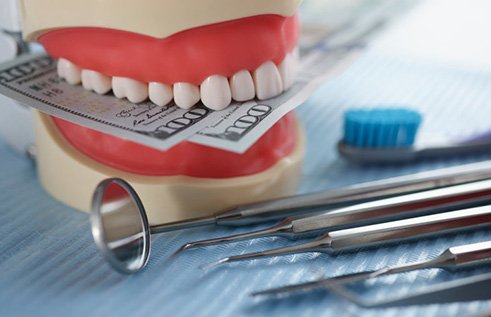
We know that the cost of your dentures in Lillington is going to be an important factor in your decision-making process. Rest assured, our team is dedicated to financial transparency and wants to help make your treatment affordable. You can learn more about your potential expenses below, but you’re always welcome to contact our team if you have any questions or concerns!
Factors that Affect the Cost of Dentures

No two patients have the exact same smile, which means no two dentures are the same. As such, the overall cost of your dentures will depend on a couple of different factors, including:
- Preliminary Treatments. Some patients need to address issues like gum disease before getting fitted for their dentures.
- The Number of Teeth to Be Replaced. Generally speaking, the more teeth you need to replace, the more costly the restoration.
- The Type of Denture. Implant dentures combine a traditional denture with dental implants. The implant posts add to treatment expenses but can be well-worth it!
Are Implant Dentures More Expensive?

In most cases, an implant denture is going to be more expensive than a traditional denture – at least in terms of upfront costs. However, over time, choosing to support your dentures with dental implants can actually save you money. Implant dentures require fewer repairs and replacements on average and provide unique oral health benefits such as jawbone preservation. Many patients find that they don’t need to visit the dentist or pay for corrective treatments as often as those who wear traditional dentures.
Does Dental Insurance Cover Dentures?

Most dental insurance plans cover some of the costs of denture treatment. As a dental insurance-friendly office, we can help you confirm how much coverage you’re eligible for and make sure all of your claims are filed correctly. Just let us know if you need assistance in navigating your benefits, and we’ll gladly review the details of your plan!
Other Options for Making Dentures Affordable

Dental insurance benefits aren’t the only way to make dentures affordable in Lillington. Our office partners with CareCredit, a reputable third-party financier. We find that the vast majority of those who apply for CareCredit are accepted and receive access to little-to-no interest monthly payment plans. If you’re worried about paying for all of your treatment costs at once, CareCredit financing can help ease the burden.